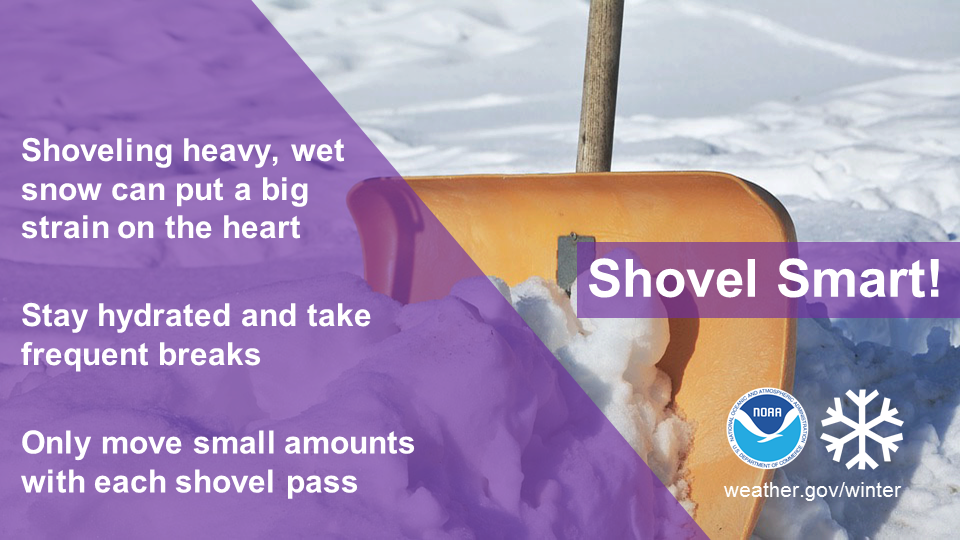
❄️ Snow Shoveling Safety Reminder ❄️
About 11,500 people visit the emergency room each year due to snow-shoveling injuries—and according to the National Weather Service, much of our area is likely to see snow soon. A little preparation can help keep you safe.
🧤 Prepare Yourself
→ Dress warmly in layers and wear slip-resistant boots
→ Drink plenty of water (cold weather is dehydrating!)
→ Eat snacks with complex carbohydrates for steady energy
→ Warm up your muscles before heading outside
🧹 Shovel Safely
→ Lift with your legs, not your back
→ Take frequent breaks (about every 5–10 minutes)
→ Shovel small scoops—1–2 inches at a time
→ Push snow when possible instead of lifting
→ Pace yourself and stop immediately if you feel chest pain, dizziness, or shortness of breath
🚨 Important Safety Tips
→ Clear snow from exhaust and dryer vents to prevent carbon monoxide poisoning
→ When shoveling sidewalks and curb cuts, clear at least 36 inches (or follow your local rules) so people using wheelchairs and mobility aids can pass safely
→ Shovel around fire hydrants—every second matters in an emergency
❤️ If You Still Have Energy
Consider helping by clearing:
→ Accessible parking spaces (occupied and empty)
→ Curb cuts and ramps
→ Storm drains to reduce flooding as snow melts
💬 What’s your go-to tip for shoveling smarter—not harder?